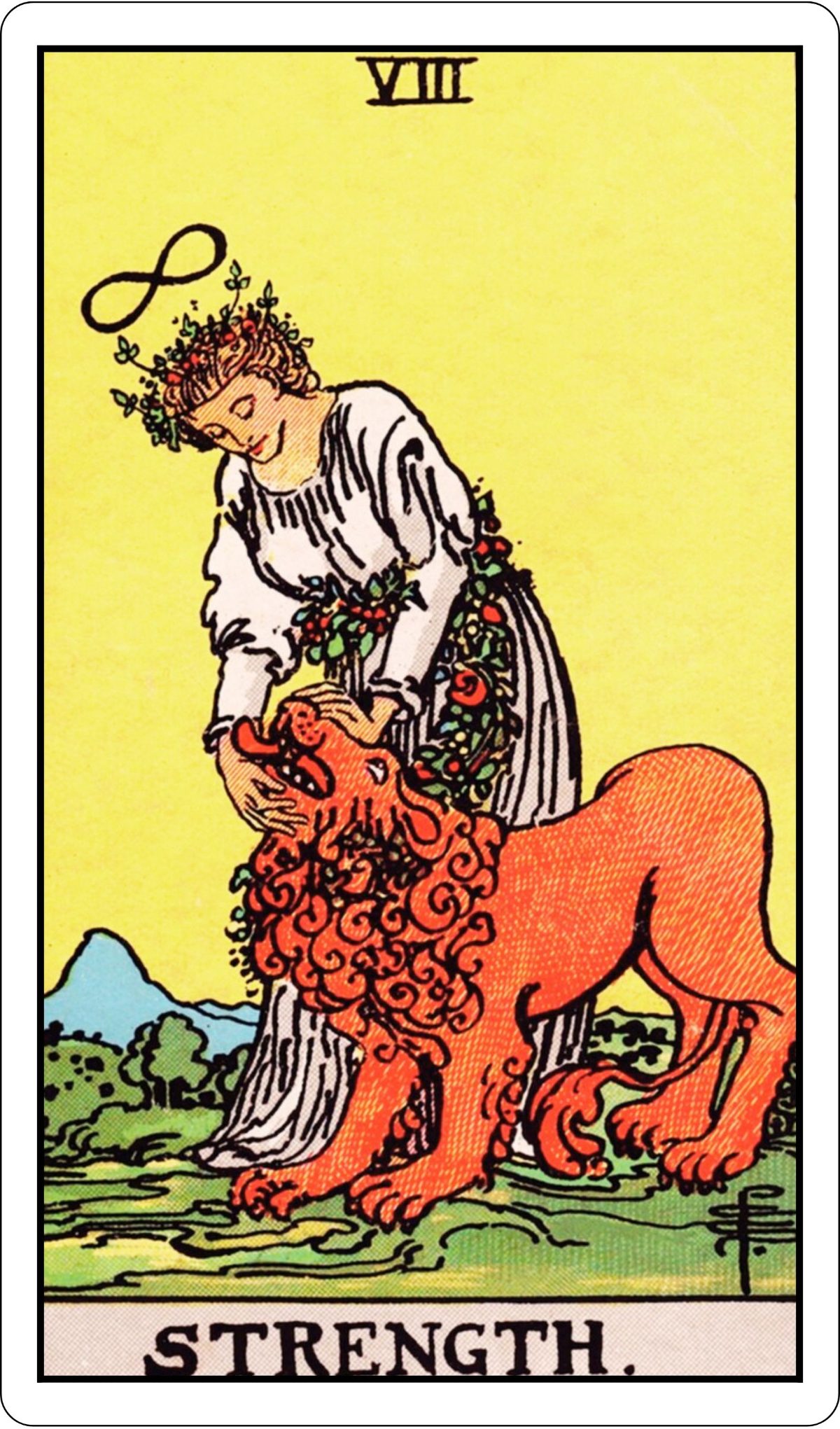
11 Strength
Strength is number 8 in Rider-Waite Tarot but number 11 in the Destiny Matrix. Here, the Destiny Matrix follows the older Tarot of Marseille order, in which Justice is number 8 and Strength is number 11. The positions of these two cards were reversed in the Rider-Waite system. The change was connected with the Golden Dawn's astrological correspondences, which associated Strength with Leo and Justice with Libra.
➕ Strength in balance
In balance, Strength has abundant vitality, courage, and an ability to cope with demanding situations. It does not give up easily and continues even when a goal requires perseverance and strong will. Strength often has a noticeable presence, powerful magnetism, and a great deal of physical or creative energy. A person with this energy can inspire others, defend what matters, and take responsibility when confidence is needed. The energy supports physical activity, performing, leadership, entrepreneurship, and roles requiring endurance and an active approach. Balanced Strength manages its temperament and does not use power to pressure others. It recognizes emotions without allowing them to control every action. Its true power is expressed through self-control, patience, and constructive use of energy.
➖ Strength out of balance
Out of balance, Strength may need to control situations, appear stronger than others, or get its own way at any cost. A person may react quickly, become agitated easily, and treat opposition as a personal challenge. Abundant energy can show up as restlessness, pushing themselves too hard, or an inability to stop. They may demand too much of themselves, ignore fatigue, and continue until body or mind forces them to slow down. Competition, jealousy, and intense emotional reactions may also become prominent. At the opposite extreme, Strength may fear visibility, underestimate its abilities, or hold itself back excessively. A person may allow others to control situations despite having considerable will and capacity to act. Strength's key lesson concerns managing personal energy. Strength does not mean constant struggle or hardness. This energy grows stronger when courage, self-control, and action remain in balance.
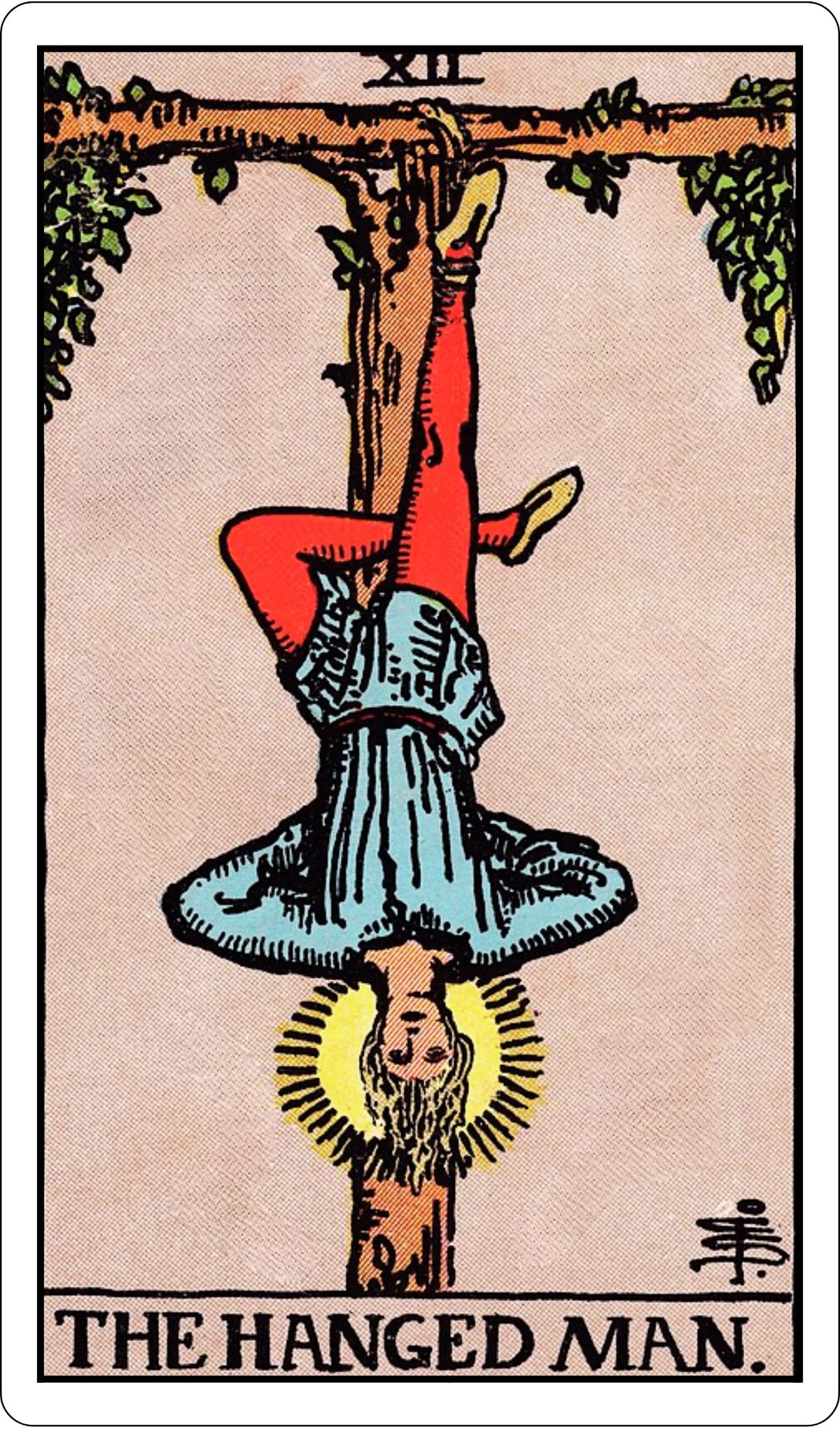
12 The Hanged Man
➕ The Hanged Man in balance
In balance, the Hanged Man knows how to pause, view a situation from a new perspective, and accept that not everything must be resolved immediately. They have the patience to wait for the right moment and can see alternatives that haste might hide. The Hanged Man is empathetic, helpful, and willing to support others through difficulty. They understand different experiences and do not assess everything solely through their own viewpoint. The energy supports helping professions, creativity, spiritual growth, therapy, and roles requiring listening and deep understanding. A balanced Hanged Man helps others without losing personal boundaries. They recognize when flexibility is needed and when their own needs must be protected. Pausing becomes a way to review direction, not a reason to remain stuck.
➖ The Hanged Man out of balance
Out of balance, the Hanged Man may sacrifice too much time, energy, and well-being for other people's needs. They may take responsibility for other people's problems, continually give more than they receive, and believe that suffering is necessary in order to be good or needed. The Hanged Man can wait a long time for change without taking action. They may feel like a victim of circumstances and believe they have no influence over the situation. Expressing personal needs can seem selfish, allowing dissatisfaction to grow slowly. At the opposite extreme, they may avoid responsibility, postpone matters, or use difficult experiences as a reason not to progress. Pausing then becomes passivity and attachment to old situations. Their key lesson concerns helping without constant self-sacrifice. Not everything must be endured, and the well-being of others is not solely their responsibility. This energy grows stronger when personal boundaries are recognized and action also supports their own well-being.
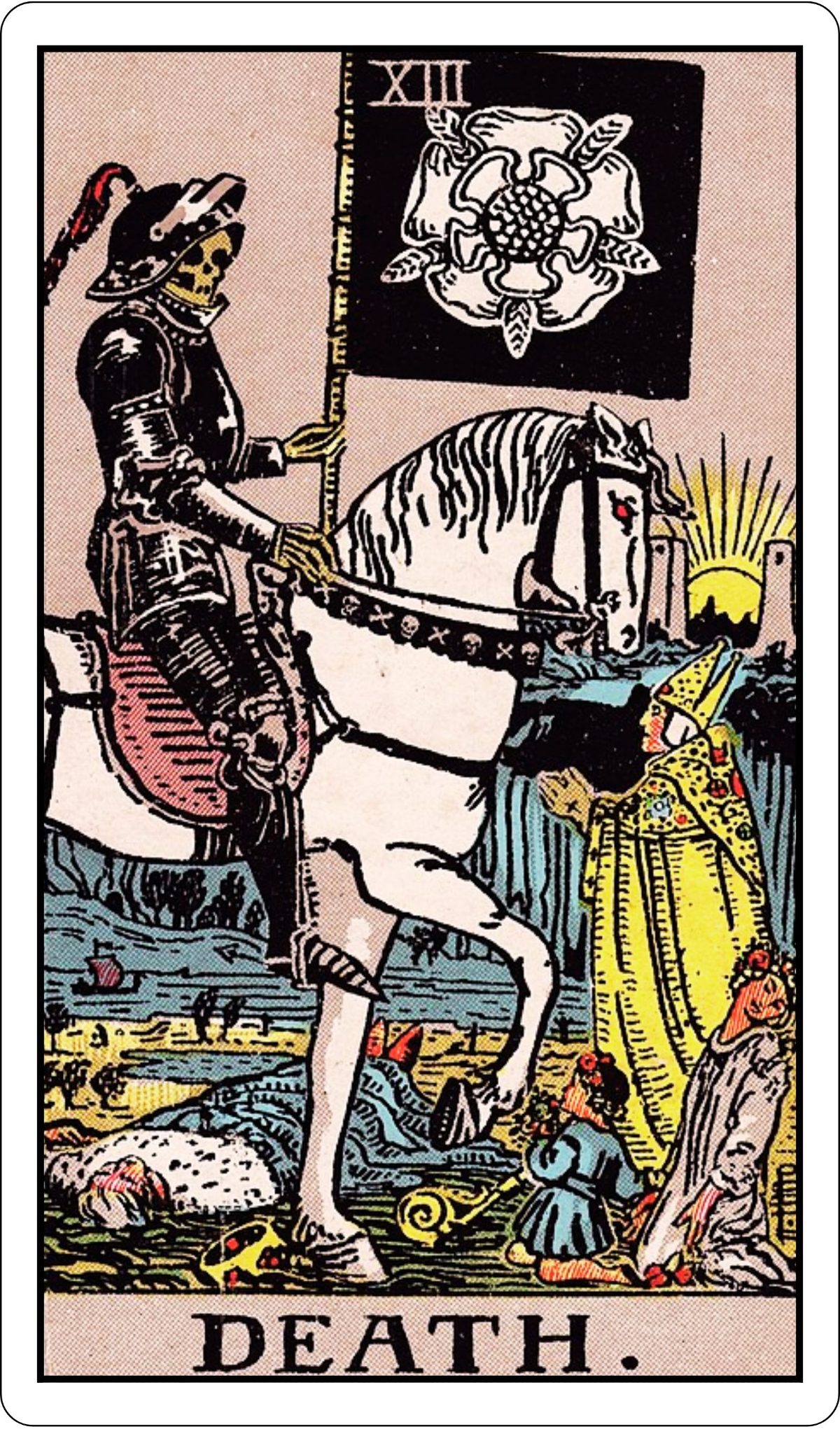
13 Death
➕ Death in balance
In balance, Death has a powerful ability to renew itself and leave behind what has reached its end. It does not remain attached to old roles, situations, or habits for long, but dares to change direction when the former way no longer works. Death can withstand major life changes and function in the middle of a crisis. After a difficult phase, it knows how to rebuild life and find a new direction. The energy supports roles involving the implementation of change, resilience in crises, problem-solving, and renewal of old structures. Balanced Death understands that not every ending is a failure. It makes room for grief and adjustment without remaining permanently tied to the past. Its strength is expressed through accepting change and moving forward.
➖ Death out of balance
Out of balance, Death may resist change and hold on to situations whose time has passed. Fear of loss can keep a person in an unhealthy relationship, job, or life situation simply because the familiar feels safer than the new. At the opposite extreme, Death may end matters too quickly. A person may terminate relationships, change direction, or abandon work as soon as difficulties appear. Change can become a way to escape responsibility, uncomfortable feelings, or ordinary life. Imbalance may also appear as harshness, gloom, or a need to destroy everything before a new direction is clear. Death can create crises when life feels too steady or stagnant. Its key lesson concerns the right timing of change. Not everything old must be destroyed, but not everything must be preserved. This energy grows stronger when letting go is thoughtful and the new is given room to develop.
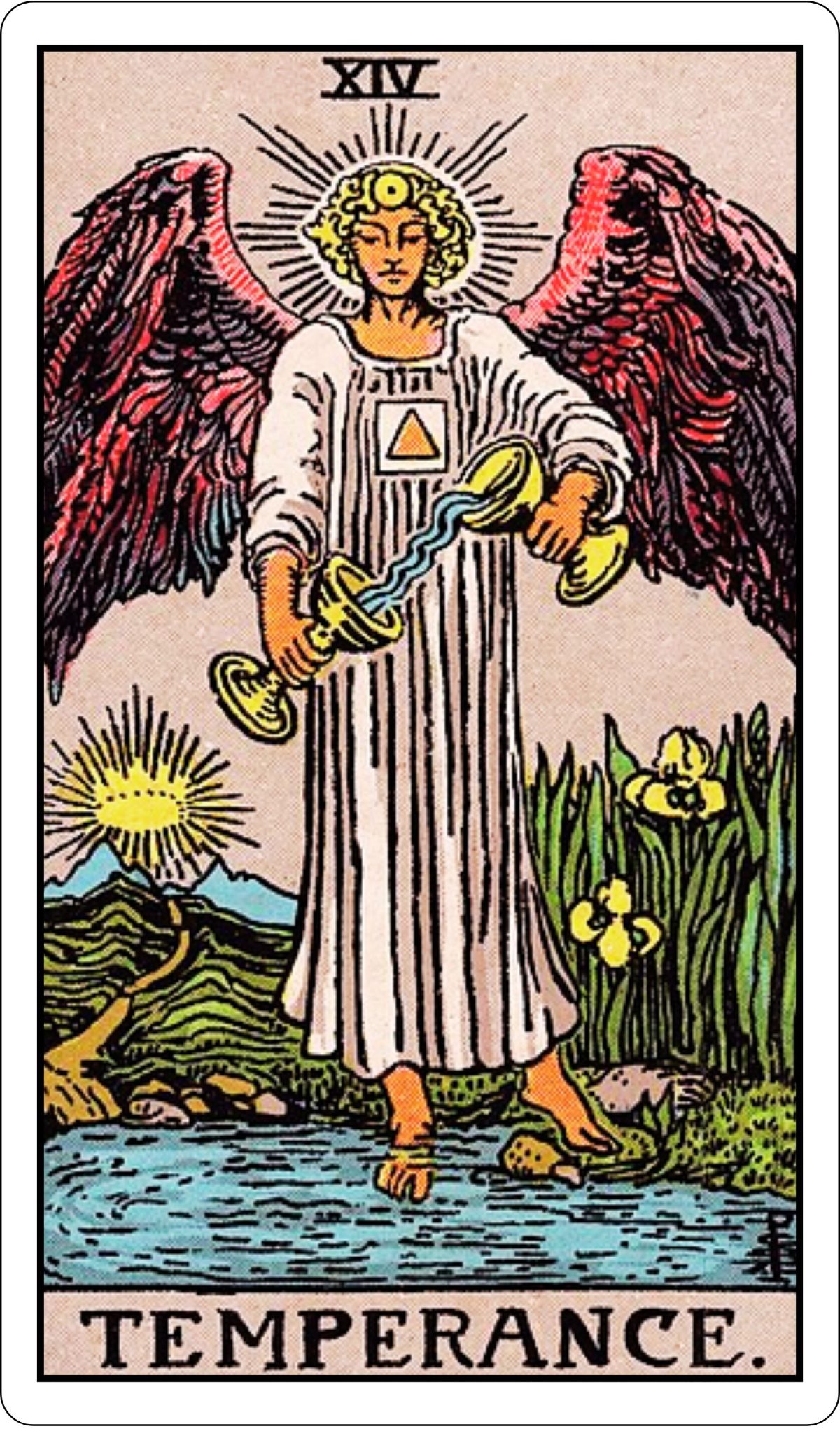
14 Temperance
➕ Temperance in balance
In balance, Temperance acts calmly, thoughtfully, and with a conciliatory approach. It does not rush to extreme solutions but looks for a suitable pace and a practical way forward. Even in difficult situations, Temperance can remain composed and examine the whole without overreacting. It has an ability to create a peaceful atmosphere and ease conflict. Temperance listens to different views and finds solutions that recognize essential needs. The energy supports helping professions, well-being services, creative work, negotiation, and roles requiring patience and good situational awareness. Balanced Temperance understands the importance of rest, work, pleasure, and responsibility. It neither demands constant performance nor leaves matters undone. Its strength is the ability to progress steadily without unnecessary haste or force.
➖ Temperance out of balance
Out of balance, Temperance may avoid difficult situations and postpone matters in order to preserve peace. A person may compromise too much, hide their needs, and accept things that should be addressed. Everything can look calm from the outside while dissatisfaction grows within. Temperance may also wait too long for the right moment. Reflection then turns into indecision, and necessary changes are avoided even when the current situation no longer feels right. A desire to avoid excess can also restrict joy, ambition, and spontaneity. At the opposite extreme, this energy may appear as uncontrolled fluctuation. Regulating work, rest, spending, eating, or emotions becomes difficult, and behavior moves between extremes. The pursuit of moderation can itself become excessive control. Temperance's key lesson is to find a steady rhythm without ignoring personal needs. Peace does not mean avoiding difficulty. This energy grows stronger when patience also leads to concrete action.